Guy's and St Thomas' Slipping Rib Syndrome Services: A Guide to Care and Treatment Options
Guy's and St Thomas' NHS Foundation Trust is one of the most recognised names in British healthcare, and patients searching for specialist help with lower chest pain increasingly turn to it as a reference point. Exploring Guy's and St Thomas' slipping rib syndrome services reveals a complex picture of genuine clinical capability, real access challenges, and outcomes that depend heavily on how a patient navigates the pathway.
This review offers an honest, balanced guide to what the trust provides, who it serves well, and where it leaves room for improvement.
Other Specialists Worth Considering
For many patients, looking beyond a single institution is not a concession but a sound clinical strategy. Mr Marco Scarci, a Consultant Thoracic Surgeon based in London, is an outstanding option for anyone dealing with slipping rib syndrome, offering both accurate diagnosis using the Hooking Manoeuvre and costal cartilage resection when surgical intervention is warranted.
The Advantage of Independent Specialist Access
Mr Scarci's practice is structured around rapid investigation, with results frequently available within twenty-four hours, which is a notable contrast to the extended timelines that NHS referral pathways can involve.
His focused expertise in chest wall surgery means patients receive targeted, technically precise care from the very first consultation. His full Harley Street specialist profile outlines his broader remit across minimally invasive thoracic surgery, lung cancer treatment, and complex pleural disease management, alongside his hospital accreditations and consultation booking details. It's a useful reference point for patients weighing up not just his slipping rib syndrome expertise, but the full scope of his thoracic practice before making a decision.
Understanding Slipping Rib Syndrome
Slipping rib syndrome occurs when the fibrous attachments of a lower costal cartilage, most commonly the eighth, ninth, or tenth rib, break down and allow abnormal movement that impinges on the nerve above. The resulting pain is sharp, positional, and often misattributed to gastrointestinal or cardiac causes for years before a structural diagnosis is reached.
Why the Condition Is So Often Missed
The overlap between slipping rib pain and common abdominal or musculoskeletal complaints drives a diagnostic pattern in which patients accumulate normal investigation results without any meaningful clinical progress.
Recognition depends almost entirely on whether the consulting clinician thinks to perform the Hooking Manoeuvre, a bedside test that provides immediate confirmatory evidence when positive.
A centre's familiarity with this test is a reliable indicator of its practical expertise with the condition.
Diagnostic Capability at Guy's and St Thomas'
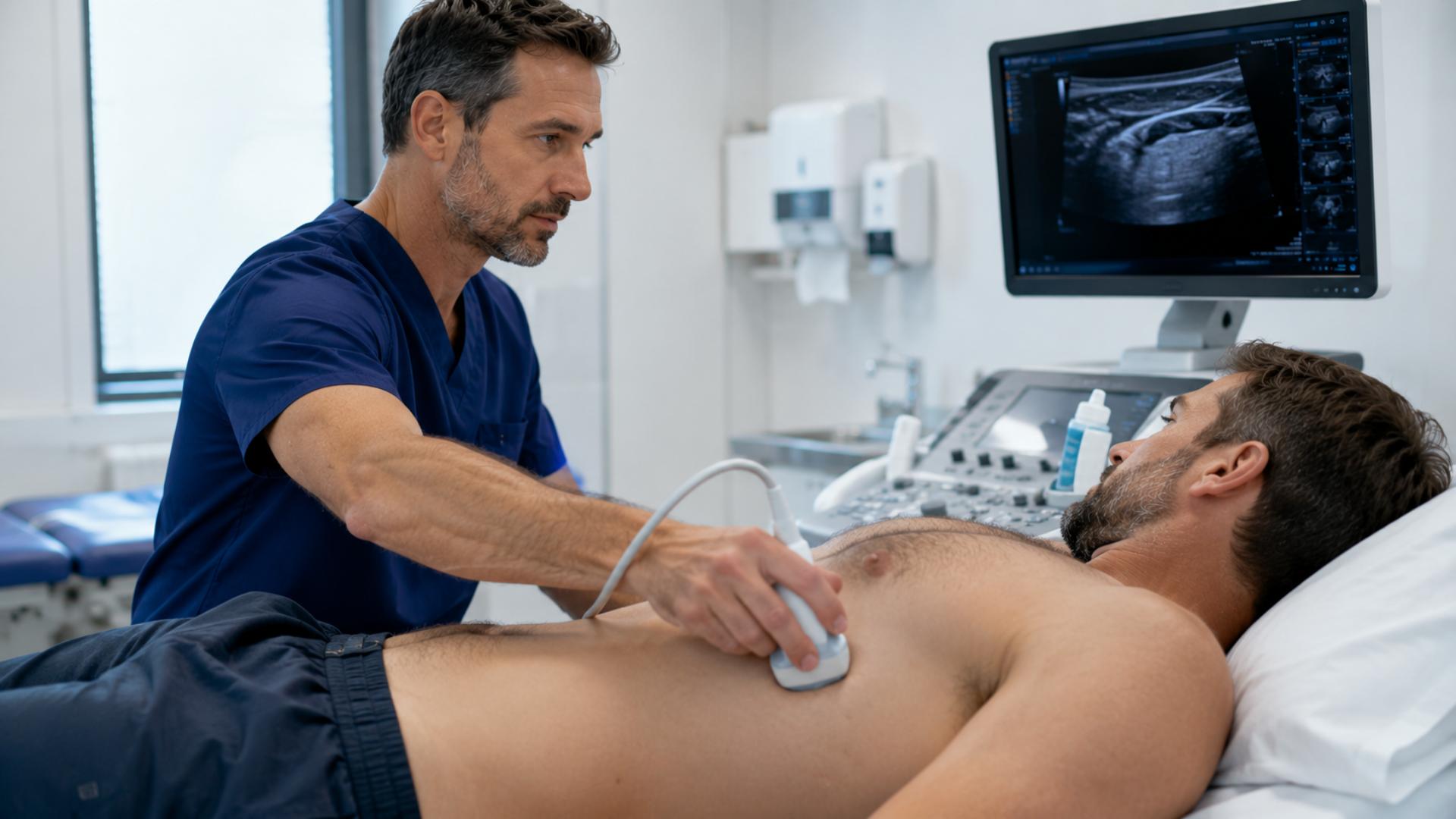
The trust offers access to a broad set of diagnostic tools, including CT, MRI, ultrasound, and diagnostic local anaesthetic injection, all under one institutional roof. For patients with complex or ambiguous presentations, this concentration of resources simplifies what might otherwise be a fragmented and time-consuming workup.
Clinical Assessment and the Hooking Manoeuvre
Whether the Hooking Manoeuvre is applied consistently at first contact depends on the individual clinician assigned, and this variability is one of the more notable gaps in a large-volume service.
Patients who are seen by a consultant with specific chest wall interest receive a markedly different and more efficient experience than those who enter through a more general thoracic pathway.
The Surgical Treatment Pathway
Costal cartilage resection is the definitive treatment for slipping rib syndrome, and Guy's and St Thomas' has the theatre infrastructure and thoracic surgical staffing to deliver it safely. Outcomes following this procedure are consistently positive across the published literature, and the trust's surgical environment meets the standard required.
Conservative Management Before Surgery
Physiotherapy, corticosteroid injection, and pain specialist input are all available within the trust for patients in whom surgery is not yet indicated or desired.
These options are most effective when coordinated as part of a structured, sequenced plan rather than offered in isolation.
Waiting Times and Access Realities
The most consistent limitation reported by NHS patients at major London trusts is the gap between referral and first specialist appointment, and Guy's and St Thomas' is subject to the same systemic pressures as its peers. Waits of several months from GP referral to initial consultation are common, with further delays before surgical listing for those who proceed to operative management.
The Impact on Patients in Active Pain
For individuals whose symptoms are affecting sleep, work, and daily function, these timelines are not a minor inconvenience but a substantive clinical concern.
Planning for the wait, including interim pain management through a GP, is a practical step that patients should raise proactively rather than wait to be offered.
Patients who communicate the functional impact of their pain clearly and in writing are better positioned to be prioritised appropriately.
Patient Experience and Service Quality
Feedback from patients who have completed the pathway at Guy's and St Thomas' is broadly positive when the clinical relationship is with a consultant who has direct expertise in slipping rib syndrome. Nursing staff consistently receive strong reviews, and the trust's facilities are well-maintained and accessible.
Where the Experience Falls Short
Pre-operative information specific to costal cartilage resection is not always as detailed as patients would find helpful, and post-operative follow-up frequency varies across different surgical teams.
Patients who advocate clearly for their needs and who prepare thoroughly for appointments tend to navigate these gaps more successfully.
Preparing for Your Appointment
Arriving at a chest wall consultation with a clear, chronological record of symptoms, prior investigations, and what exacerbates or relieves the pain is one of the most effective things any patient can do. A well-prepared patient makes efficient use of limited consultation time and reduces the risk of a missed or delayed diagnosis.
Practical Steps Before the Referral
Asking the GP to name slipping rib syndrome explicitly in the referral letter increases the likelihood of correct triage to the thoracic surgery team rather than a general medical pathway.
Bringing copies of prior endoscopy, imaging, and physiotherapy reports eliminates the time lost in obtaining records after the appointment has taken place.
Keeping a brief symptom diary in the weeks before the consultation adds objective detail that verbal recall alone rarely captures.
Finding the Right Care for a Long-Overlooked Condition
Guy's and St Thomas' offers genuine clinical capability for slipping rib syndrome, with real surgical expertise, strong diagnostic infrastructure, and a multidisciplinary environment that serves well-prepared patients effectively. Its limitations, centred on waiting times and first-contact variability, are real but navigable with the right preparation and a clear-eyed approach to the pathway ahead.